
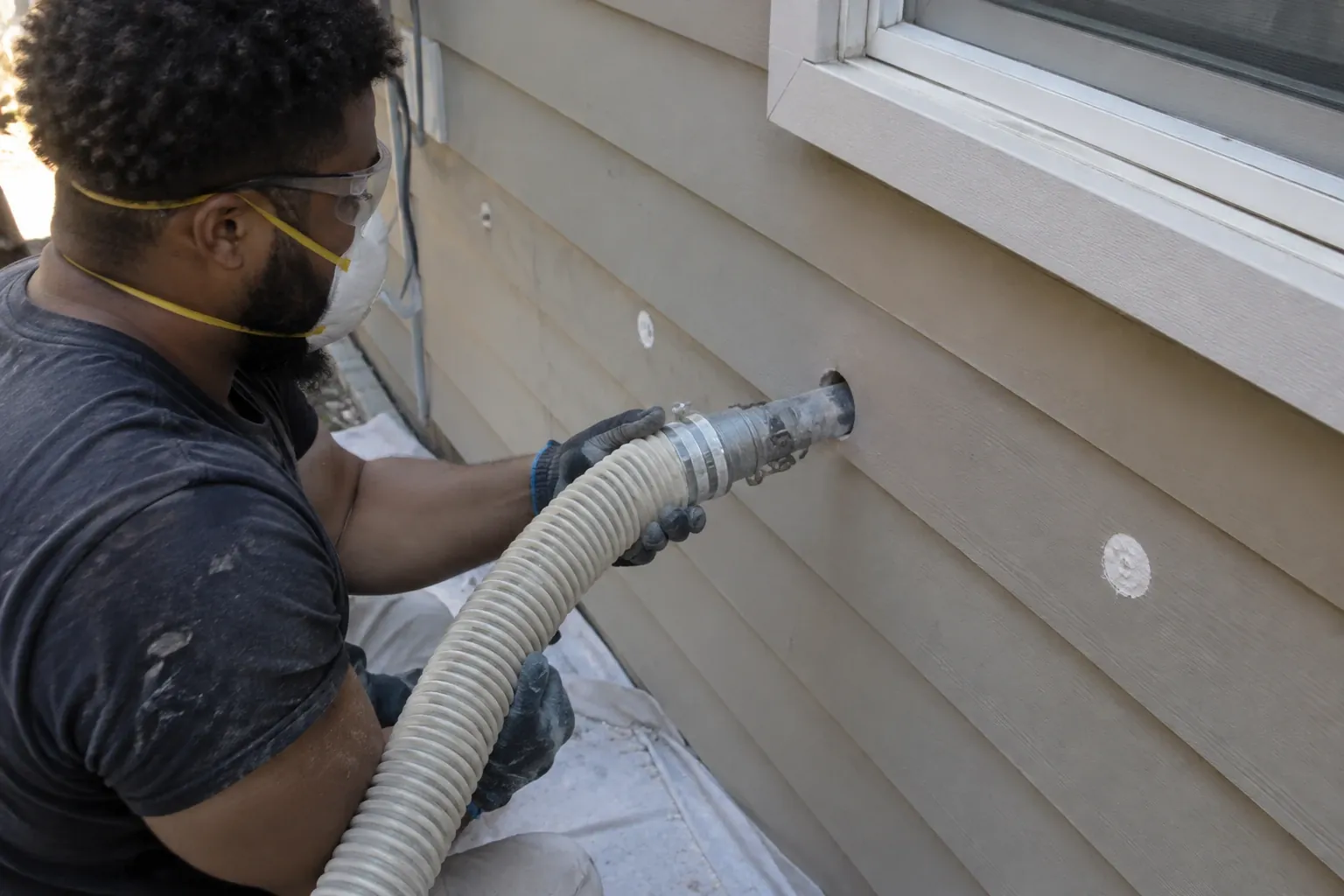
Cavity wall insulation for interior and exterior walls
High-performance, blown-in insulation installed through small holes that are patched when we're done. No tearing out drywall, no replacing siding.
- Non-toxic cellulose made from recycled material
- Fills cracks and gaps for a seamless barrier
- Warmer, quieter rooms and lower bills
Get your free wall insulation inspection
Tell us where heat, cold or noise is getting through your walls.
About one third of temperature change in a home comes through uninsulated walls
Energy-efficient homes are insulated from roof to foundation, but many older Bay Area homes were built with little or no insulation in the walls.
Attic insulation should come first, since about a quarter of heat loss is through the top of the home. Then it's time to look at the walls.

Non-toxic, blown-in, high performance
Today's wall insulation is made from state-of-the-art materials.
Made from recycled material
Cellulose is made mostly from recycled paper, which helps reduce your carbon footprint.
No fiberglass
Cellulose contains no fiberglass, so there are no itchy glass fibers in your walls.
Seamless coverage
Blown cellulose fills cracks and crevices to create a continuous barrier.
Fire, mold & pest resistance
It's treated with borates, which help it resist fire, mold and insects.
Empty wall cavities vs. insulated ones
Read this guide as text
- BeforeEmpty cavities let cold, heat and outside noise straight through.
- AfterCavities completely filled with treated, non-toxic cellulose.
- ResultBetter thermal performance, less noise transfer, more fire resistance.
Insulated walls block heat and sound
We use specialist equipment to blow treated cellulose into the cavities of both interior and exterior walls. Insulated walls are a barrier to heat transfer and help soundproof your home.
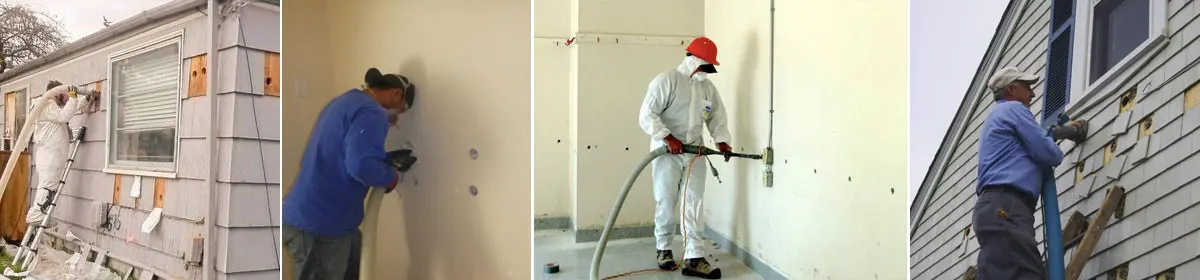
Drill, fill and patch
A cavity wall has two faces with a gap between them, the cavity. Most walls, interior and exterior, have one. Installation method and expertise are critical to how well the insulation performs.
- We drill a planned pattern of small holes
- Treated cellulose is blown in under pressure until the cavity is completely full
- Holes are plugged and patched
- The result: thermal efficiency, sound proofing and fire resistance that should last the life of your home
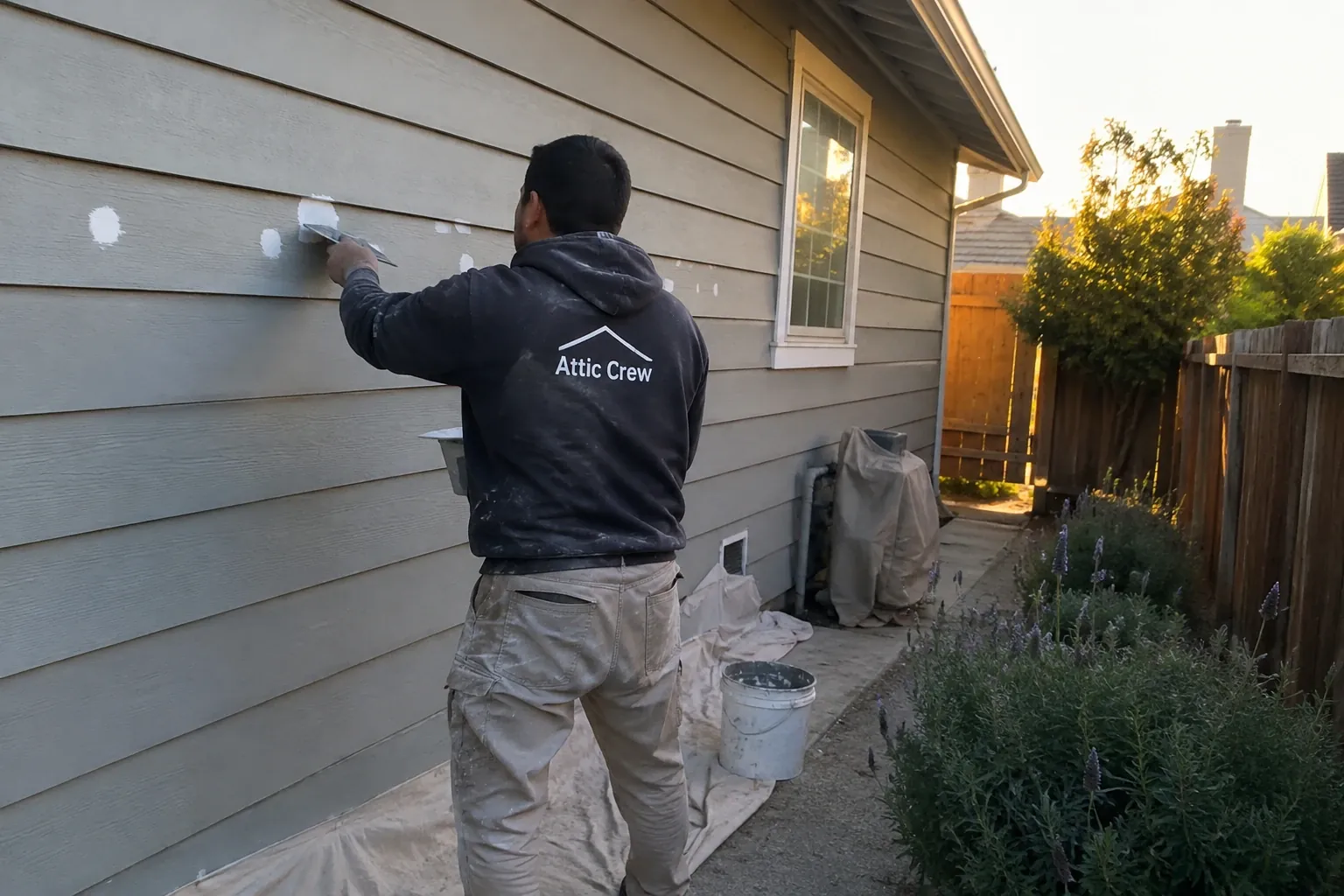
How cavity wall insulation goes in
Read this guide as text
- Blown in through small holesNo tearing out drywall or siding.
- Treated, non-toxic celluloseFills the cavity between the drywall and the siding.
- Clean, contained work areaFloors and furniture are protected.
- The payoffBetter thermal performance, less outside noise, more fire resistance.
Cavity wall insulation projects
Tap any photo or project to see it full size and step through it.
More cavity wall insulation projects

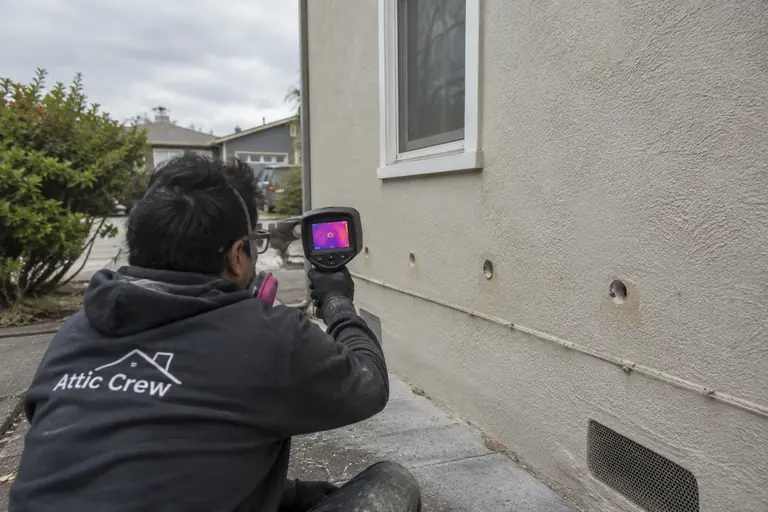

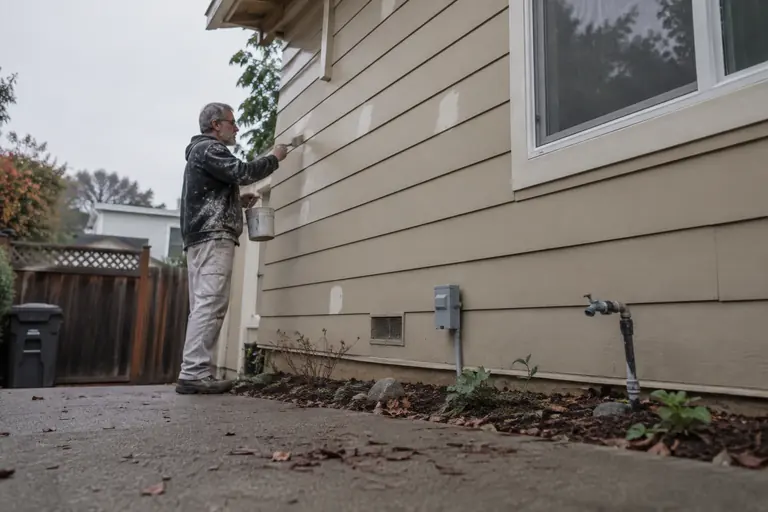
Some images show actual Attic Crew jobs; others are representative, with details changed for customer privacy.
What our customers say
With 5-star ratings and reviews on Google and Yelp, you can breathe easy knowing you're in good hands.
“This company has done a unrivaled job. They stand behind their reputation and are true to their word. They did insulation clean up, installing new insulation, sanitized and rodent proof. It's only been a few days but you can already tell the different in the temperature of our house!”
“Attic Crew really saved us! The insulation we had in our house was so ancient, we were using the heater all day and night! After Attic Crew changed our insulation and cleaned our attic, everything became so much better! The house stays cool on the warm days and warm on the cold days.”
“I was looking for a company to do my attic insulation and saw they used Eco bat insulation so I decide to give them a call. Am I glad I did, I never realized what a difference insulation would make! They explained everything to me and made very quick work of the process. I couldn't be happier with the entire experience, from the quote to the final job!”
Cavity Wall Insulation FAQ
Do you have to remove drywall or siding?
No. We blow insulation in through small holes drilled in a planned pattern, then plug and patch them.
Is cellulose insulation safe?
Yes. It's made mostly from recycled paper and treated with borates, and it contains no fiberglass.
Will wall insulation make my home quieter?
Yes. Filled wall cavities reduce sound coming in from outside and moving between rooms.
Should I insulate the attic or the walls first?
Usually the attic, since more heat is lost through the top of the home. We'll look at both during the free inspection and recommend the best order.
Related services
Let's get you an estimate
We quote firm prices so there are no surprises. Book your free cavity wall insulation inspection today.